Classic Car Insurance in Tennessee: Agreed Value vs Actual Cash Value
If you own a classic car in Tennessee, whether it is a restored Mustang in Franklin or a vintage truck you take to weekend shows around Brentwood, your insurance matters more than most people realize. The biggest question we see is this, should your policy be agreed value or actual cash value? The difference can mean thousands at claim time. Let’s walk through it in plain English so you can protect what you have built.
What Makes Classic Car Insurance Different?
Classic cars are not like daily drivers.
They are:
Appreciating or stable in value, not depreciating
Often restored or customized
Driven less frequently
Stored more carefully
Because of that, standard auto insurance often falls short.
That is where classic car insurance in Tennessee comes in. It is designed for collector vehicles and gives you more control over how your car is valued.

The Core Problem Most Owners Miss
Most policies default to actual cash value, and that can create a gap.
Here is the issue:
You may have invested $75,000 into a restoration
The insurance company may value it at $35,000 based on age and depreciation
In a total loss, that is all you receive
For affluent families with collections, multiple vehicles, or rare models, this is a real risk.

What Is Actual Cash Value?
Actual Cash Value (ACV) means:
The value of your car today after depreciation.
In simple terms:
The insurer looks at age, condition, mileage
Then subtracts depreciation
You are paid what they believe it is worth today
Why This Can Be a Problem
For classic cars:
Depreciation does not apply the same way
Market value can actually increase
Custom upgrades are often undervalued
Tennessee Example
A Brentwood client owns a restored 1969 Camaro:
Restoration cost: $90,000
Market comps: $85,000 to $110,000
ACV payout estimate: closer to $50,000 to $60,000
That gap is where frustration happens.

What Is Agreed Value?
Agreed Value means:
You and the insurance company agree upfront on what the car is worth.
That number is written into the policy.
If there is a total loss:
You receive the agreed amount
No depreciation
No arguing at claim time
Why Affluent Owners Prefer This
Agreed value provides:
Certainty
Protection for restoration investment
Alignment with collector market values
Side-by-Side Comparison
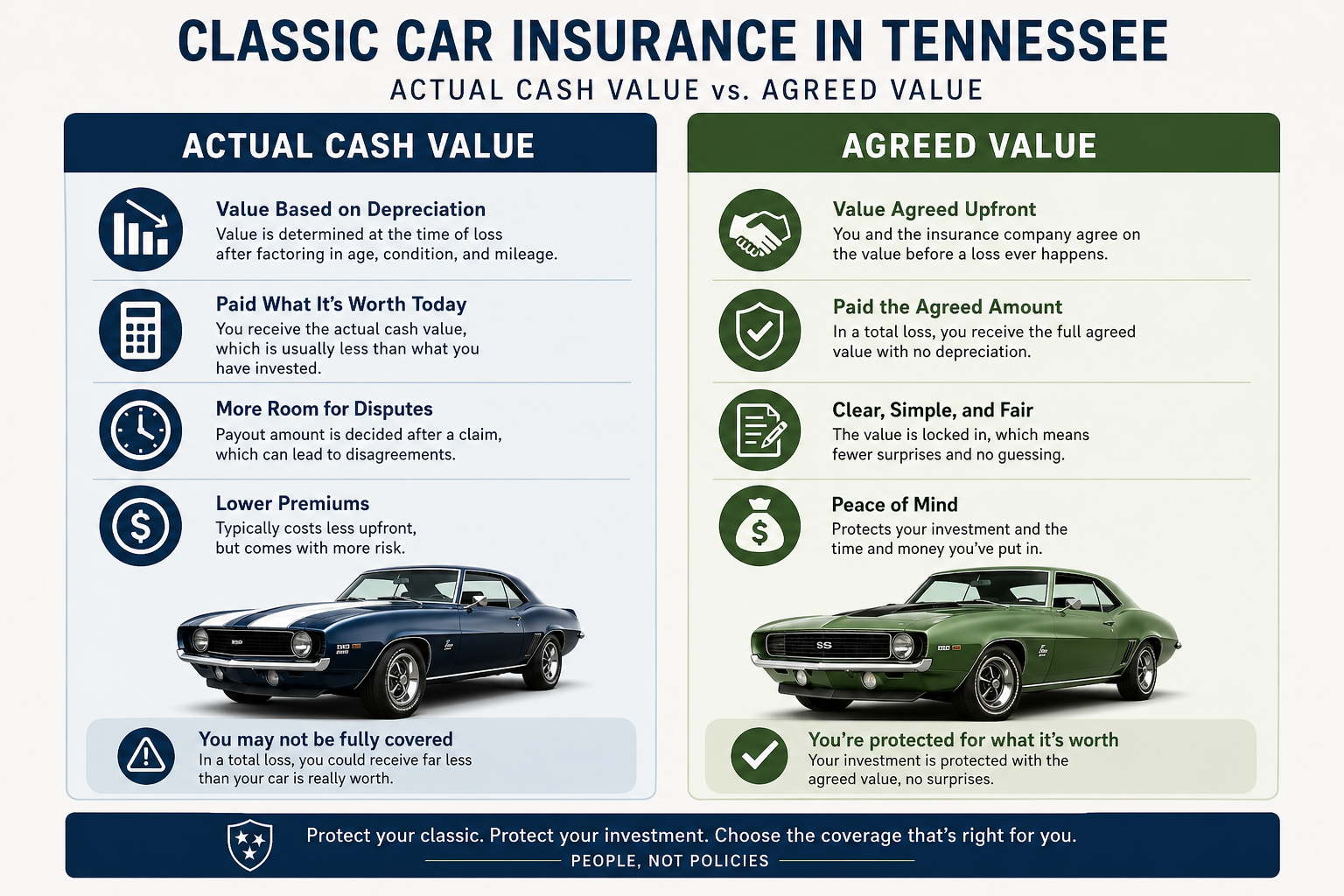
Actual Cash Value
Based on depreciation
Value determined at claim time
Lower premiums, but higher risk
Often used in standard auto policies
Agreed Value
Value set upfront, no depreciation
Higher confidence in claims
Designed for collector and classic vehicles
Who Needs Agreed Value Coverage?
If you fall into any of these categories, it is worth a closer look:
You own a classic or antique vehicle
Your car has been restored or customized
You attend shows or collector events
You keep vehicles at a second home or lake property
You have multiple specialty vehicles
Many families in Williamson County and across Middle Tennessee fall into this group.
How Value Is Determined
For agreed value policies, insurers typically look at:
Professional appraisals
Photos and documentation
Restoration records
Market comparisons
This ensures the number is fair and defendable.
Common Mistakes to Avoid
Even high-net-worth families make these:
Assuming their standard auto policy covers full value
Not updating value after restoration
Forgetting about vehicles stored at secondary homes
Not bundling coverage with a single advisor
Insurance works best when it is coordinated, not pieced together.

How This Fits Into Your Bigger Insurance Picture
Classic cars are just one piece. That is where working with a relationship-driven agency matters.
If you want a clear, personalized review of your classic car coverage, reach out to Holt Insurance today.
Our family has been serving Tennessee families since 1946, and we are here to help you protect what matters, without confusion or guesswork.
Frequently Asked Questions
-
Yes, typically a bit more. But you are paying for certainty. For most classic car owners, the added protection is worth it.
-
In many cases, yes. Insurers want documentation to support the value. This helps avoid disputes later.
-
Absolutely. If you restore or the market changes, your policy should be reviewed and adjusted.
-
Yes. Many policies assume limited use, like weekend driving or shows. Lower mileage can help keep premiums reasonable.
-
They can be, but it needs to be structured correctly. Storage location and usage both matter.
-
You will likely be covered at actual cash value, which may leave a significant gap if there is a loss.