Jet Ski and Personal Watercraft Insurance in Tennessee

There's nothing like a Tennessee summer on the water. Whether you're carving across Percy Priest, cooling off at Old Hickory, or hauling the family out to Center Hill or Tims Ford for the weekend, a jet ski turns a hot July afternoon into the best part of the season.
Then a guest wipes out, or someone clips a dock, or the machine falls off the trailer; and a lot of owners discover the hard way that they were never actually covered.
Here's what every personal watercraft (PWC) owner in Middle Tennessee should understand before the next launch.
Does Tennessee require jet ski insurance?
In most cases, no. Tennessee does not have a state law requiring you to carry liability insurance on a jet ski or personal watercraft the way it does for the car in your driveway.
But "not required" and "not needed" are two very different things. A few situations can make coverage effectively mandatory:
If you financed it. Lenders almost always require you to carry physical-damage coverage until the loan is paid off.
If you store it at a marina. Many marinas and slip operators require proof of liability insurance.
If you ever let anyone else ride it. This is where most owners get burned, and we'll come back to it below.
Skipping coverage to save a few dollars is one of those decisions that feels fine right up until the moment it doesn't. A single serious injury on the water can turn into a claim far larger than the value of the machine itself.
Your Homeowners Policy Probably Won't Save You
This is the single biggest misconception we hear: "I don't need a separate policy — it's covered under my home insurance."
In almost every case, it isn't.
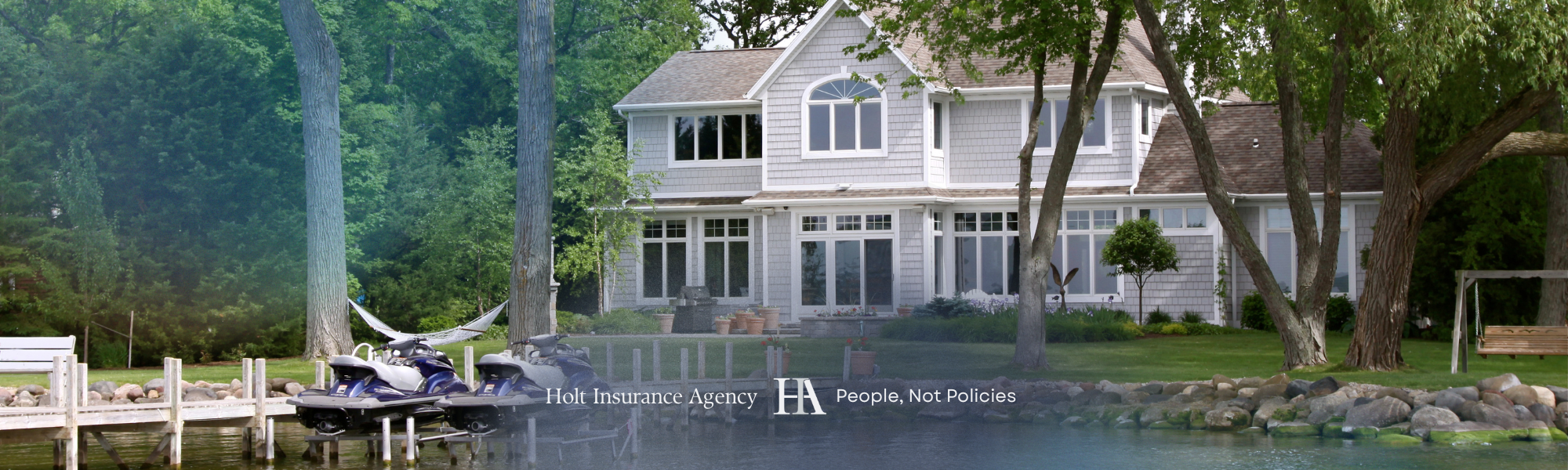
Standard homeowners policies extend a small amount of watercraft liability, but only to little, low-powered boats. Think a trolling motor or a modest outboard, typically rated 25 horsepower or less. A modern jet ski makes far more power than that, which means PWC are generally excluded from your homeowners liability altogether.
And that's just the liability side. Your homeowners policy also won't pay to repair or replace the jet ski itself if it's damaged on the water, flips, sinks, or is stolen off the trailer. You might get a sliver of coverage for the craft while it's sitting in your garage — but the moment it hits the lake, you're on your own.
If you take one thing from this post: do not assume your home insurance covers your jet ski. Confirm it. We're glad to look at your current policy and tell you exactly where the gaps are.

What Personal Watercraft Insurance Actually Covers
A dedicated PWC or watercraft policy is built for how these machines are really used. Depending on the coverage you choose, it can include:
Liability — pays for injuries or property damage you (or anyone you let ride) cause to other people, boats, or docks. This is the big one.
Physical damage — repairs or replaces your jet ski after a collision, capsizing, fire, or storm.
Theft — covers the machine if it's stolen, including off the trailer.
Medical payments — helps with medical bills for you and your passengers after an accident.
Uninsured/underinsured boater — protects you when someone else causes the wreck and has no coverage of their own.
Wreckage removal and fuel-spill liability — costs you'd never think about until they land in your lap.
Trailer and towing/roadside — covers the trailer and getting you home when the day goes sideways.
The good news: PWC coverage is usually more affordable than people expect. Premiums depend on the value of the craft, the limits you choose, where it's stored, and the operators' history — and because we're an independent agency, we shop multiple carriers to find the right fit instead of selling you one company's box.
Tennessee Rules Every PWC Owner Should Know
Insurance is only half of riding legal and safe in Tennessee. The Tennessee Wildlife Resources Agency (TWRA) sets the rules on the water, and a few are easy to miss:
Register it. Motorized watercraft, including jet skis, must be registered with the TWRA.
Boater education. Anyone born after January 1, 1989 must carry a TWRA Boating Safety Education Certificate to operate a motorized vessel over 8.5 horsepower. It's good for life, but you have to have it on board.
Age rules for PWC. You must be at least 16 to rent and operate a personal watercraft. Children under 12 can't operate a vessel over 8.5 horsepower unless an adult 18 or older is aboard and able to take immediate control.
Life jackets. Everyone aboard a personal watercraft has to wear a Coast Guard–approved life jacket and inflatable PFDs do not count for PWC use.
Renting one out or to friends? Tennessee law requires rental operators to give riders a safety orientation and keep a signed acknowledgment on file. Even casually loaning your machine raises real liability questions worth talking through.
Staying compliant keeps you out of trouble with the TWRA. The right insurance keeps a bad day from becoming a financial disaster. You want both.

Let's make sure you're actually covered
If you own a jet ski, or you're about to, take ten minutes before your next trip to the lake to confirm where you really stand. We'll review your current coverage, point out the gaps your homeowners policy quietly leaves behind, and put together a quote that fits how your family actually uses the water.
Holt Insurance Agency has protected Middle Tennessee families since 1946. We'd be glad to do the same for yours.
Call us at 615-221-7094 or Get Started Here.